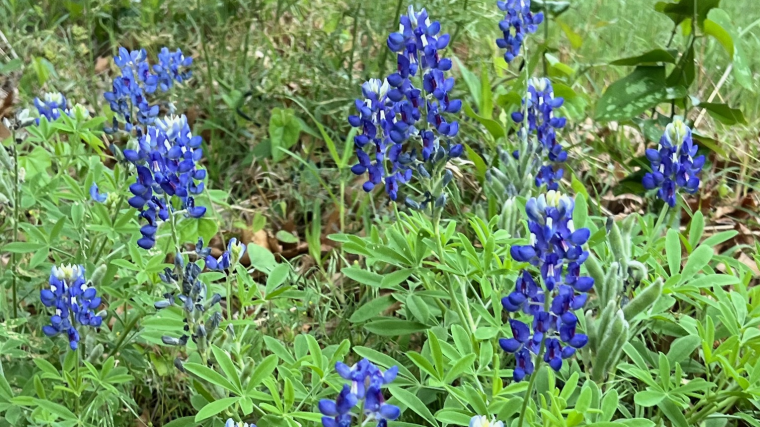
In this Observer Story written by UCLA student Shraddha Guha, we learn about Nature's Notebook observer Tom Kirwan. Tom is a Certified Local Phenology Leader involved with several Local Phenology Programs in the Dallas-Fort Worth area of Texas. This story was part of UCLA Faculty Dana Cairns Watson's course "Science Writing for Public Engagement and Community Science Projects." Students interviewed Nature's Notebook observers and then wrote a creative piece to tell the observer's story.
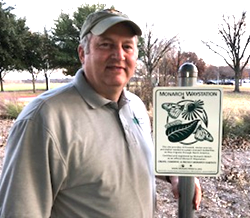
For some, gardening may come naturally, but dedicated Nature’s Notebook Observer Tom Kirwan says that “everything he started had failed” in that department. These failures, however, never diminished his passion for nature. Tom, a former project manager for international food and beverage company, switched to managing volunteer projects after he retired at the end of 2023. As Tom reflected on his childhood, he realized that his love for nature began long before he started managing volunteer projects.
Although he didn’t realize it at the time, Tom’s parents “made a huge effort to expose [his] family to nature.” He was constantly surrounded by nature, whether that was through hikes, breakfast by the lake, biking along boardwalks on vacation, or watching animals in creeks. In 2009, Tom joined the Native Plant Society of Texas after seeing a 30th-anniversary newsletter for the Texas chapter and listening to the symposium, which piqued his interest.
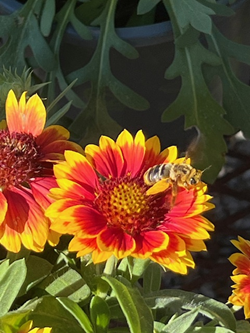
During one of the monthly society meetings, Tom met Dr. Cynthia McGuire, a professor who initiated the Local Phenology Program at Texas Woman’s University through the USA National Phenology Network’s Nature’s Notebook platform. At the time, she was the president of the Native Plant Society of Texas, and she told Tom to “buy one native plant and watch what happens.” By planting just one native species, Tom observed the shift as hummingbirds, caterpillars, and bumblebees came into his yard, and ever since then, he has kept planting native species. Initially, Tom focused on planting native species in his ¼ acre subdivision, but eventually expanded to 7 ½ acres of land after buying undeveloped property across from his home solely to restore the native grasses and plants that originally existed in the ecoregion. Tom emphasizes that all local wildlife benefit from the growth of their native plants.
After retirement, Tom became a member of the Texas Master Naturalist-Elm Folk Chapter. Master Naturalists, who are found across all states, are volunteers who bridge the distinct gap between scientific research and the community. They provide environmental education to the public to help us understand the world around us. The Texas Master Naturalist program required Tom to make a project as part of his participation in the class, where he proposed using phenology with Nature’s Notebook to support the USA National Phenology Network’s Time to Restore Texas project. What started with only investigating the plant world turned into a much deeper knowledge of the environment- animals, plants, geology, and the ecosystems they live within. Through the implementation of his phenology proposal, Tom began using Nature’s Notebook to work with the USA National Phenology Network to answer the question of what the impact of climate change is on pollinator plants and the species that depend on them. Texas has 10-12 ecoregions, so to determine which plants to observe, the USA-NPN organization invited members of the Texas Master Naturalist and other ecology specialists to discuss which native plants were most critical for pollinators in Texas within the various ecoregions. The numerous plants were then short-listed to 29 species that range across the state, and out of those, Tom decided to observe the bluebonnet.
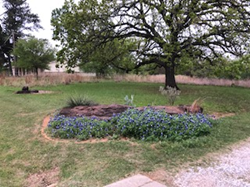
Bluebonnets aren’t just the state flower of Texas to Tom; they are “hardy, durable, don’t require good soil, don’t require gardening or tending” as they thrive on their own. Tom dedicated his time to observing bluebonnets that grew by the side of his driveway, watching them survive the Texas droughts and heavy rain. He even observed his first bluebonnet leaf grow in December and was fascinated that bluebonnets could persevere through the brink of winter, while many plants that grow around them can not survive the cold temperature. His passion for protecting plants was reflected in his words when he mentioned “people’s self-interests destroy plants” and the environment around us. This led me to think about my own experiences with bluebonnet fields in Texas, and how I remember people who went to the fields simply to take pleasing pictures rather than focusing on the plants they were stepping on and destroying.
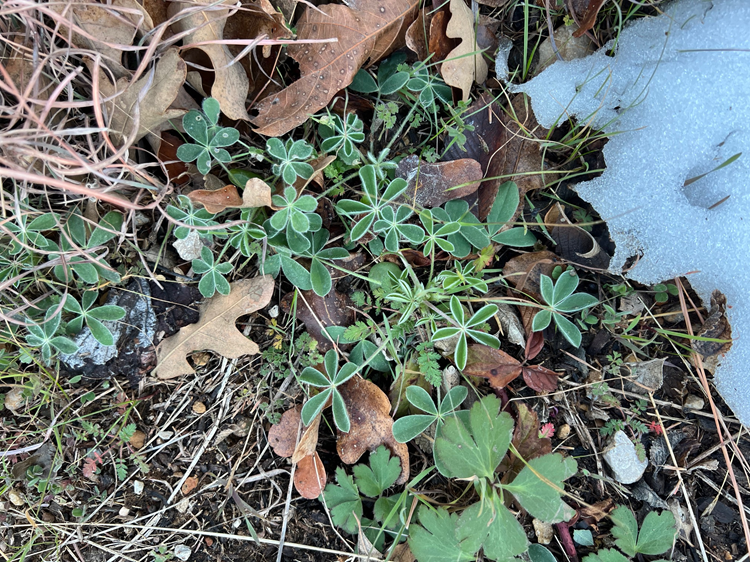
His interests extend past the bluebonnets, but they were a stepping stone that taught him how to be more observant. “The question is not what you look at, but what you see,” Tom said as he quoted Henry David Thoreau. Tom discussed how we are taking away native species’ habitat and their ability to grow by invading their land and taking it for our benefit. He expressed his immense disappointment with humans being "gardeners and consumers” who farm for their own profit or for the aesthetic rather than “paying attention [to the environment] and being stewards of the planet.” As he talked about his appreciation for the development of plants, I realized how little I truly knew about the world around me. Every day we walk past our driveway looking at the grass that keeps growing, but we never see the droplets of dew in the morning, the slow fading color on a leaf as the weather changes, or how plants constantly shift to face the sun throughout the day.
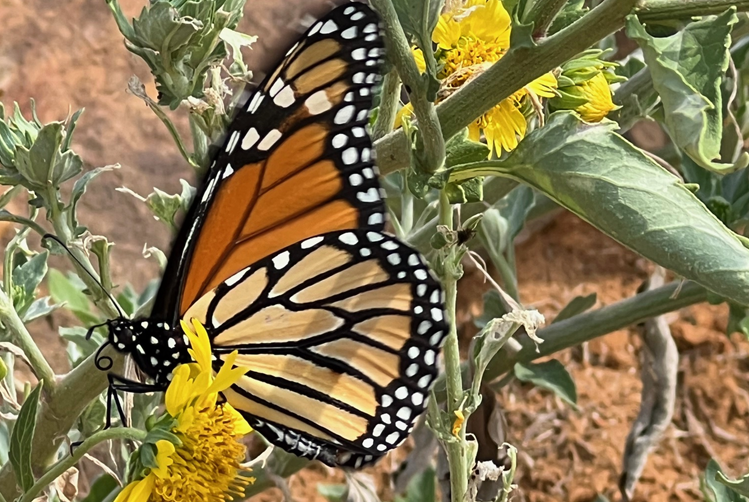
As Tom and I continued our conversation, I began to realize how integrated the USA National Phenology Network was with the Texas Master Naturalist Program. In March, during Phenology Week, they hosted a phenology training program to help people implement Nature’s Notebook in their daily observation routines. Not only had Tom achieved the status of Certified Local Phenology leader, but he also experienced a full-circle moment, taking him back to the beginning of his interest in nature. Tom discovered that the phenology program established by Dr. Cynthia McGuire has become inactive since her passing. In honor of her contributions, Tom reinstated the program and wants to continue making observations in the Pollinator garden, where Dr. McGuire had her students observe.
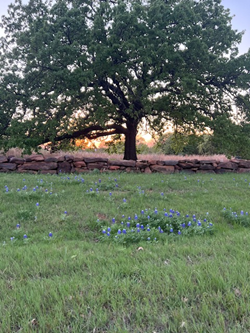
Towards the end of our conversation, Tom shifted toward a legacy of community engagement through the projects he leads, one of which is involved with the Lewisville Lake Environmental Learning Area. This area is 2,500 acres of protected natural land that is used as a learning center dedicated to fostering environmental interests in students in grades K-12. Here, Tom focuses on guiding participants’ efforts to deliver data about critical native plant flowering and seeding timing. Through his passion for nature, Tom has made sure that his personal observations, which began at the side of his driveway, contribute to something far greater than one plant and will help preserve Texas wildlife for generations to come.
Learn about author Shraddha Guha:
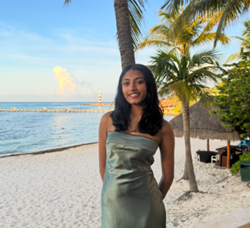
My name is Shraddha Guha! I am a second-year, Psychobiology major at UCLA, and I had the privilege of interviewing Tom Kirwan. As someone who lived in Texas before coming to California for college, I loved seeing Tom's perspective on an environment that I have grown up in!